
Lighting Design That Works for PA Homes
Hello — let’s talk about lighting
I’m Matt Morton. I’ve spent 25+ years in the trades, and since founding Craftsworth Construction in February 2017 we’ve completed 427+ projects helping homeowners around Chester and Delaware County get lighting that looks great and works every day. Lighting is one of those remodel elements that can change how a room feels and functions, so I want to give you practical, hands-on tips you can use during planning or a remodel.
Start with layers — ambient, task, and accent
Good lighting design begins with layers. Treat each room as a combination of three layers and design for each:
- Ambient lighting for overall illumination—recessed cans, surface-mounted fixtures, or a central chandelier depending on the room.
- Task lighting where work happens—under-cabinet lights at kitchen counters, vanity lights at the bathroom mirror, or a bright reading lamp in a living room nook.
- Accent lighting to highlight art, architectural details, or create mood—track lights, wall washers, or toe-kicks that wash light up a textured wall.
When these three work together you can adjust the room’s function and mood without rewiring every time you want a different feel.
Be practical about fixture placement
Placement matters more than how flashy a fixture is. A few practical placement rules I use on site:
- Keep task lights close to the surface they serve—under-cabinet lights should sit just under the cabinet front so the light washes the counter, not the cabinet face.
- Over islands and dining tables, pendants should clear line-of-sight while sitting low enough to create a pool of light. In open layouts, use multiple pendants instead of one oversized fixture.
- For recessed lights, plan to avoid shadows from cabinets and people. Position cans in front of work areas, not directly behind them.
- In basements, layer high-output ambient with lower-level accent and task lights so you don’t over-brighten the whole space.
Choose the right color temperature and quality
Color temperature (measured in kelvin) and color rendering (CRI) change how colors and skin tones appear. A few rules that help during selection:
- Use warmer temperatures (soft white) in living rooms and bedrooms for a cozy feel, slightly cooler in kitchens where you want clarity.
- Consistent color temperature in a room is critical — mixing too warm and too cool fixtures can make finishes look odd.
- Choose fixtures with good color rendering so paint, tile, and food look natural. Ask to see light samples in person if you can.
Dimmers and controls = daily flexibility
Dimmers and simple scene controls are one of the best investments you can make. They let you tune brightness for cleaning, cooking, entertaining, or evening relaxation without changing bulbs or fixtures. Make sure your chosen fixtures and LEDs are dimmer-compatible — not all drivers play well with every dimmer type. When planning a remodel, talk with your electrician or contractor about grouping lights into logical circuits and control zones.
Room-specific tips
Here are directly usable tips for rooms we commonly remodel in Chester and Delaware County homes:
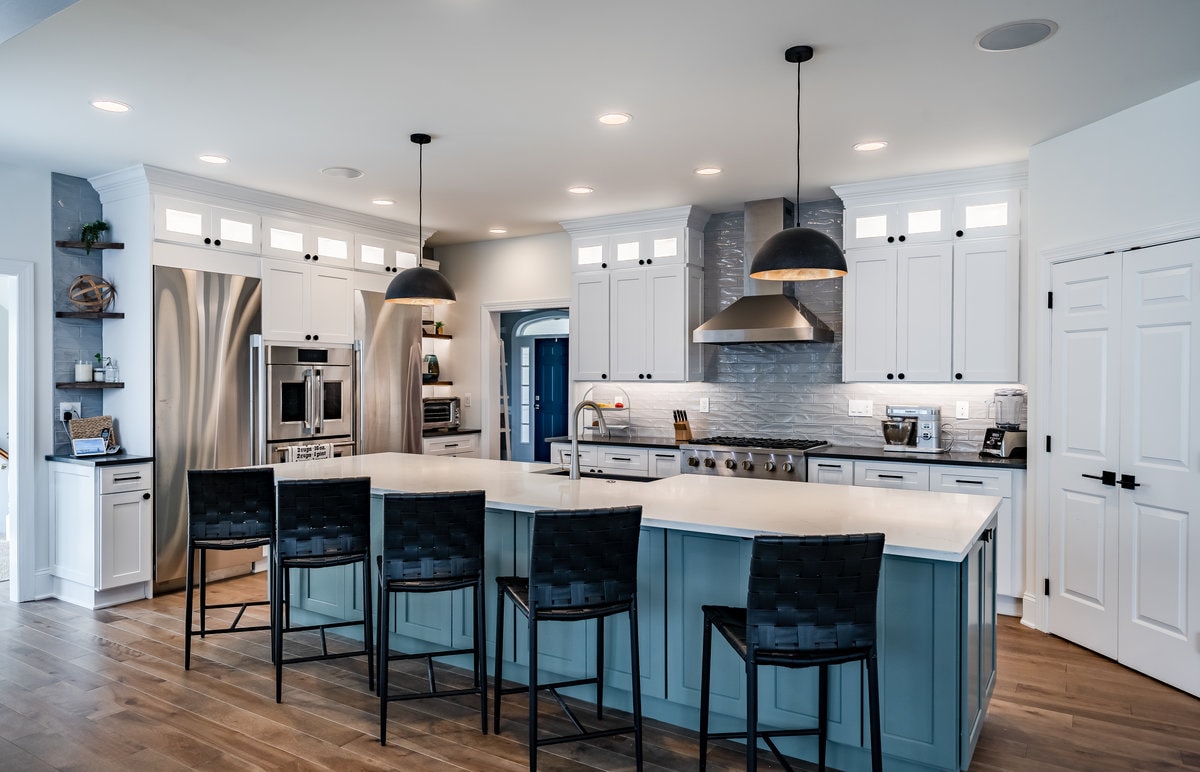
- Kitchens — Combine recessed ambient with under-cabinet task lighting and pendants over islands. Avoid placing recessed lights directly over where you’ll stand prepping; place them a bit forward to avoid casting shadows from your head.
- Bathrooms — Vanity lighting should light faces evenly. Wall-mounted fixtures on either side of the mirror or a continuous light above the mirror work better than a single overhead can that casts downward shadows. Use wet- or damp-rated fixtures in shower areas.
- Basements — Layered lighting prevents the “industrial” feel. Mix recessed ambient with wall sconces, floor lamps, and task lighting for a finished, comfortable space. Consider separate circuits for media and game areas to control glare.
Practical planning checklist
Before you finalize a lighting plan, walk through this checklist with your designer or contractor:
- List every activity in the room (cooking, reading, homework, entertaining).
- Map required task locations and mark where task lights should be installed.
- Choose a primary ambient strategy (recessed, pendant, flush mount) that fits the room’s style.
- Decide which lights need dimmers or smart controls and verify compatibility with chosen fixtures.
- Confirm wet/damp ratings for fixtures in bathrooms, showers, or exterior locations.
- Ask to see fixtures and samples in person — online photos don’t always show color temperature or finish accurately.
Working with a remodeler in Chester & Delaware County
If you’re planning a remodel, include lighting early in the design conversation. Changing lighting is easiest when cabinetry, ceilings, and electrical are still being planned. At Craftsworth Construction we make lighting part of the design-build conversation — it’s integral to how a space functions, not just an afterthought.
Final practical tips
My last pieces of advice from 25+ years on job sites:
- Test before you finish: temporarily hang your key fixtures and try different bulb temperatures for a day before final installation.
- Don’t skimp on task lighting — it’s the most used light in a space.
- Ask your contractor to show a simple lighting plan with control zones and circuit notes so you know how things will be wired.
Good lighting makes a room more usable and feels like a thoughtful upgrade — it’s worth planning well.
If you’re remodeling in Chester County or Delaware County and want to talk lighting with someone who’s been through hundreds of projects, reach out. We’re at Craftsworth Construction — founded in February 2017 — and we’re happy to walk through options and samples with you so the first switch you flip feels just right.
Hours: Monday–Saturday 8 AM–5 PM, Sunday 10 AM–3 PM. Our owner-confirmed Google snapshot (2026-11-14) shows a 4.9-star rating from 37 reviews — we don’t take that lightly and we’ll earn the right to light your home properly.