
Vanity Choices for Real-World Bathroom Remodels
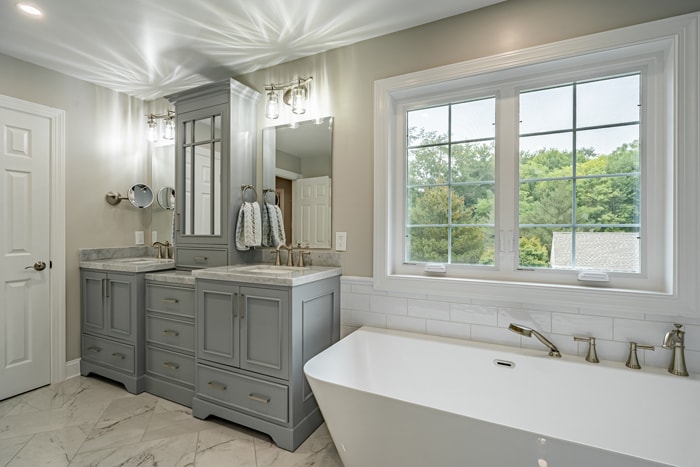
Why the vanity matters more than you think
I'm Matt Morton, owner of Craftsworth Construction and I've been in the trades for over 15 years. The vanity is one of the few pieces in a bathroom that combines function, plumbing, storage and style—get it right and your remodel feels effortless; get it wrong and you'll be fighting daily frustrations. Below are straightforward, actionable steps to help you pick a vanity that works for your space and lifestyle here in Chester County and Delaware County.
Start with accurate measurements
Before falling in love with a cabinet or countertop photo, measure. I recommend doing this in three steps:
- Clear the area and measure wall-to-wall and floor-to-ceiling near the vanity location.
- Measure plumbing rough-ins (center of drain to adjacent walls, and height of supply lines). If you don’t know where those are, pull off the old vanity trim or take a photo and your contractor can confirm.
- Check clearances for doors and drawers—measure door swing, toilet location, and any obstacles like towel bars or heated floors.
Write these numbers on a sheet and take photos. In older Chester County homes it’s common to find out-of-plumb walls or uneven floors; accurate measurements let you choose a vanity that accommodates or plan for shimming or scribing.
Decide sink type based on lifestyle
There are four common sink options—and each affects countertop use and plumbing:
- Undermount: Clean look, easy to wipe countertop into sink. Requires a solid countertop (quartz, granite).
- Drop-in (self-rimming): Less expensive, easier to replace, but seams can trap gunk.
- Vessel: Stylish and makes a statement, but you lose some counter space and need taller faucets.
- Integrated/solid-surface: Seamless, low-maintenance, but more costly to replace if damaged.
Think about how you use the space: if you’re a busy family in Havertown with kids brushing teeth and leaving splashes, an undermount or integrated sink is forgiving. If it’s a powder room used sparingly, a vessel sink can add character.
Storage: drawers vs cabinets
Storage design answers a practical question—what do you need to keep at arm’s reach?
- Deep drawers are excellent for hair tools, stacked toiletries, and organizers. Consider drawer dividers or pull-out trays.
- Base cabinets with adjustable shelves work well for cleaning supplies or bulk items.
- Open shelving looks airy but requires neatness; avoid in damp basement baths where humidity may affect items.
Pro tip: reserve at least one shallow drawer for daily-use items (toothbrushes, meds) and a deeper drawer for bulky items. If plumbing is in the center, look for sink-base drawers with a U-shaped cutout made to maximize storage.
Materials and finishes that hold up in our climate
Not all finishes are created equal—Chester and Delaware County weather brings humidity swings that can affect cabinetry and hardware.
- Cabinet material: Solid wood is beautiful but can expand; engineered plywood or MDF with a water-resistant finish is often more stable and cost-effective.
- Countertops: Quartz is low-maintenance and durable. Natural stone like marble looks great but needs sealing.
- Finishes & hardware: Choose corrosion-resistant finishes (brushed nickel, oil-rubbed bronze) and match finish durability with local water hardness—if your area has hard water, go for finishes rated for that condition.
Height and comfort for everyday use
Standard vanity height is about 32-36 inches. Taller, 'comfort' vanities around 34-36" are easier on knees and backs for adults—great if you live in a house with mostly adults. For a child's bathroom, consider a step-stool or a lower vanity surface. If you're planning to age in place, opt for a height that accommodates seated use and space under the sink for a wheelchair if needed.
Plumbing, electrical, and what to budget for changes
Moving drains or supply lines adds cost. As a rule of thumb in this area, minor faucet swaps are simple, but shifting a drain more than a few inches often requires opening the floor or wall and can add a day or two of work and several hundred dollars.
- If you want a double vanity where a single existed, confirm the existing rough-in and whether the floor joists or framing allow the move.
- Adding under-cabinet lighting or an outlet for an electric toothbrush shaver usually adds little time but should be installed to code—your contractor will pull the right permits.
Custom vs. prefab: which is right for your project?
Prefab vanities are cost-effective, quicker to install, and come in standard sizes. Custom cabinetry is pricier but ideal for odd spaces, historic Chester County homes, or when you want a built-in look. At Craftsworth Construction we often blend both: use a quality prefab cabinet and customize the countertop or trim to fit out-of-plumb walls.
Installation details that make a difference
During installation, watch for these practical touches:
- Use marine-grade caulk where counter meets wall, especially near showers or tubs.
- Scribe the vanity to uneven walls rather than leaving gaps; it looks cleaner and keeps moisture out.
- Confirm drawer soft-close hinges and drawer glides are rated for heavy use.
A quick practical checklist before you buy
- Measure walls, plumbing rough-ins, and clearances.
- Decide sink type and confirm countertop compatibility.
- List storage needs (daily items vs bulk storage).
- Choose materials suited to humidity and usage.
- Confirm if plumbing or electrical moves are needed and budget for them.
- Ask about lead times—custom pieces often add weeks to the schedule.
Final thoughts
Choosing a vanity is about balancing form and function. Get the measurements right, pick a sink style that fits your daily routine, and choose materials that stand up to local humidity and wear. If you want help on-site—measuring, reviewing rough-ins, or matching a vanity to an old home—Craftsworth Construction is local to West Chester and regularly works across Chester and Delaware Counties. We're happy to walk a homeowner through options without pressure, because a well-chosen vanity makes the whole bathroom work better for years.
Want an on-site measurement or a second opinion? Call me—Matt Morton—at Craftsworth Construction and we’ll help you choose a vanity that fits your space and life.