
Undermount vs. Farmhouse: Which Sink Fits You?
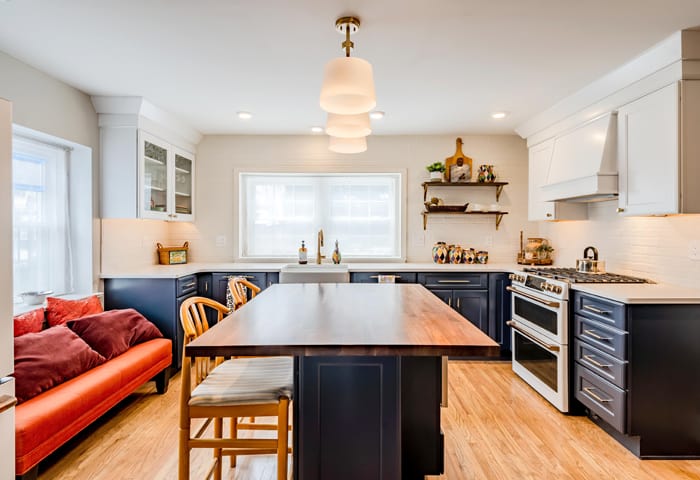
Which is right for your kitchen: undermount or farmhouse?
Hi, I’m Matt Morton. I’ve been in the trades for over 15 years working on kitchens across Chester County and Delaware County, PA. One question I hear all the time during remodels is: should I pick an undermount sink or a farmhouse (apron-front) sink? Both look great, but they behave differently. Below I’ll walk you through the practical differences, installation realities, and how to make the best choice for your lifestyle.
Quick summary of the key differences
- Undermount sinks attach beneath the countertop, creating a clean edge and easier counter cleanup.
- Farmhouse sinks have a visible front panel that becomes a design feature and sits forward of the cabinet face.
- Your choice affects countertop material, cabinet modification, depth, plumbing access, and long-term maintenance.
Practical pros and cons
Let’s break it down into things you’ll notice every day.
Undermount sinks — why homeowners choose them
- Easy cleanup: You can sweep crumbs straight into the sink since there’s no rim to trap debris.
- Sleek look: Great with stone or solid-surface countertops for a modern aesthetic common in many Chester County homes.
- Countertop compatibility: Best with granite, quartz, marble, and solid surface. Not ideal for laminate unless you plan a visible rim or special fabrication.
Undermount sinks — things to watch for
- Support and seal: Proper adhesive and mounting brackets are critical to prevent leaks and sagging.
- Countertop edge: Requires a finished countertop edge; thin, fragile materials may chip during installation.
- Water exposure: The seam needs good waterproofing—improper installation can lead to water damage under the countertop.
Farmhouse sinks — why they’re popular
- Character and depth: The exposed apron becomes a focal point. Farmhouse sinks are often deeper, great for pots and pans.
- Comfort: The forward position can mean less leaning over the counter to reach the center of the sink.
- Material variety: Available in fireclay, stainless, copper, and cast iron—lots of style options for traditional and modern farmhouse looks.
Farmhouse sinks — things to watch for
- Cabinet modification: Most farmhouse sinks require the cabinet face to be altered or a special base cabinet.
- Plumbing and access: The sink sits forward, which can make under-sink storage trickier and plumbing slightly more complex.
- Cleaning around the apron: The seam between the apron and countertop needs careful sealing to avoid buildup and potential water issues.
How to decide: a simple checklist
Use this when you’re standing in your kitchen with a tape measure:
- Countertop material: If you’re installing new stone or quartz, undermount is a great match. If sticking with laminate, farmhouse or a drop-in undermount flange might be better.
- Cabinet changes: Are you willing to modify the base cabinet? If not, an undermount or drop-in might avoid costly carpentry.
- Sink depth and use: If you frequently wash large pots, a deep farmhouse or double-deep undermount will save your back and your time.
- Style goal: Want a modern seamless counter or a statement apron? Let that guide the aesthetic decision.
- Budget for installation: Farmhouse sinks often require more labor (cabinet alterations and reinforcements), so factor that into your bid.
Local advice for Chester & Delaware County homeowners
In our area, many older homes have cabinets built for a farmhouse look but with laminate counters that don’t suit an undermount. If you’re remodeling in West Chester, Glen Mills, or neighboring towns, think about matching your sink to the era and scale of the kitchen—oversized farmhouse sinks can overwhelm a small historic kitchen, while undermounts pair beautifully with contemporary updates and stone countertops.
Installation and maintenance tips from the field
- For undermounts: Confirm your countertop maker will polish and finish the cutout edge. Use a certified fabricator—poor seams lead to water intrusion into cabinets.
- For farmhouse sinks: Check that the apron is installed square to the cabinet to avoid gaps. Use a bead of silicone where the sink meets the countertop and re-seal yearly.
- Both: Verify drain and garbage disposal alignment before finalizing. Sometimes a sink swap requires moving the drain or adjusting the P-trap.
Cost expectations
Material and fabrication vary widely. As a rule of thumb: a basic undermount stainless steel sink with straightforward installation will generally be less expensive than a heavy fireclay farmhouse sink that needs cabinet work. Factor in countertop cuts, cabinet modifications, plumbing adjustments, and reinforcement when budgeting.
Final thoughts — how I help homeowners decide
When I consult with homeowners through Craftsworth Construction, I focus on how you use your kitchen day-to-day. It’s easy to get caught up in pictures online, but the best sink is the one that fits your routine, your counters, and your cabinets. If you’re in Chester County or Delaware County and want a real-world assessment—measurements, countertop compatibility, and a clear cost estimate—I’m happy to come by and help you choose the sink that works for your family.
Practical takeaway: If you want seamless countertops and easy cleanup choose undermount when possible. If you want visual impact and deep bowls, farmhouse is for you—just plan for cabinet work and sealing.
If you’d like help sorting through options or need an installer who understands both the design and technical sides, Craftsworth Construction can walk you through samples, measurements, and installation plans tailored to your home. Pick the sink that makes your kitchen easier to use — that’s what lasts.