
Under-Cabinet Lighting That Actually Works
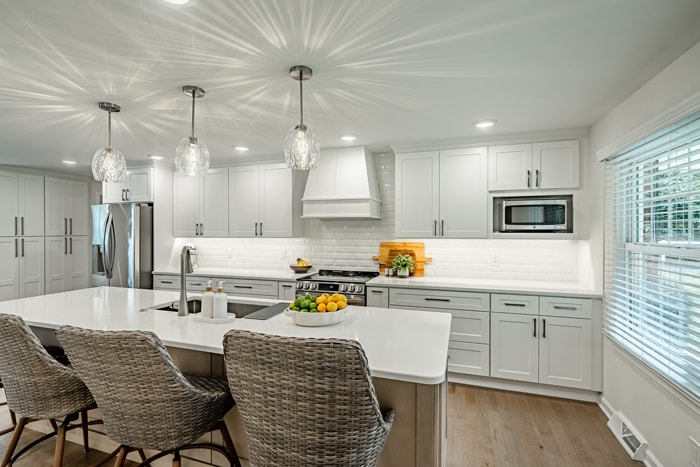
Why under-cabinet lighting matters
If you’ve ever squinted while cutting vegetables on a shadowy counter or wished your kitchen looked as crisp at night as it does during the day, under-cabinet lighting is one of the highest-impact upgrades you can make. It improves task visibility, elevates the look of your countertops, and adds a layer of ambient lighting that makes your kitchen feel finished.
Types of under-cabinet lighting—and when to pick each
Not every strip of light is right for every kitchen. Here are the options I recommend and the situations where they shine:
- LED tape/strip lights: Thin, flexible, and great for continuous, even illumination. Best for entire counter runs. Choose quality SMD chips (2835 or 5630) and aluminum channels to dissipate heat and eliminate hot spots.
- Puck lights: Round fixtures that create pool-like light. Good for accenting specific zones or inside open shelving. Use wider-beam pucks to avoid a spotted look.
- Linear LED fixtures: Slim, hard-bodied fixtures that mount under the cabinet. They’re durable and provide uniform light—excellent for new cabinetry in remodels.
- Rope lights: Less common for task lighting because they’re softer and less bright. Useful for toe-kick or decorative accents, not primary countertop lighting.
Practical specs to choose wisely
When you’re comparing products, don’t rely on the pretty photos—check these numbers:
- Brightness: Aim for roughly 300–500 lumens per linear foot for task lighting on counters. Go higher if you do detailed tasks like pastry work.
- Color temperature: 2700–3000K for a warm, classic kitchen look; 3000–3500K if you want a neutral, modern feel. Avoid 4000K+ unless you prefer a clinical look.
- CRI: Choose fixtures with a CRI of 90+ so produce colors (like meat or vegetables) appear natural.
- Voltage and drivers: Most LED strips run on 12V or 24V DC. 24V systems are better for longer runs because they have less voltage drop.
Placement tips for shadow-free counters
Placement makes or breaks under-cabinet lighting. Here are things most homeowners overlook:
- Mount lights 2.5"–4" back from the cabinet front edge to light the work surface without casting your own shadow.
- If your cabinet has an overhanging face frame or thick lip, recess the channel behind the lip or use angled fixtures to avoid glare.
- For wall cabinets deeper than 15", consider dual rows or angled fixtures so light reaches the front of the counter.
- Use continuous strips or closely spaced linear fixtures for seamless light. Pucks should be spaced 12"–18" if they’re the only source.
Wiring, drivers, and code considerations
Electrical work around kitchens must meet local code and be done safely. In Chester County and Delaware County we follow Pennsylvania’s electrical rules—meaning you should have a licensed electrician handle wiring, splices, and any new circuit creation.
Couple of practical pointers:
- Run power through the cabinet to a central power location (often the toe kick or an adjacent cabinet) where the LED driver lives. That keeps hard-to-reach drivers out of sight but accessible for service.
- Match the LED driver wattage to the total wattage of your runs and leave 20% headroom. Undersized drivers will overwork and fail prematurely.
- If you want dimming, buy a dimmable driver that’s compatible with your dimmer type—forward-phase (leading edge), reverse-phase (trailing edge), or 0–10V. Ask your electrician for recommendations based on the smart control you want.
Controls and smart options that actually make life easier
Dimming isn’t just for mood—it extends LED life and reduces glare during evening prep. Here are common control options homeowners like:
- Hardwired dimmer switch: Reliable and straightforward with most compatible drivers.
- In-cabinet touch or puck switch: Nice for retrofits if you don’t want new wall wiring.
- Smart controls: Zigbee, Z-Wave, or Wi‑Fi controllers let you group lights, set scenes, and integrate with voice assistants. Useful if you want the under-cabinet lights to come on with other kitchen lights.
- Motion sensors: Great for pantries or utility counters—automatic, energy-saving, and very convenient.
Installation checklist for homeowners
- Decide goals: task light, accent, or both.
- Measure runs and choose 12V vs 24V system. Prefer 24V for longer continuous runs.
- Pick color temp and CRI.
- Choose mounting: recessed channel, surface-mounted linear, or pucks.
- Select compatible driver and dimmer/smart control.
- Hire a licensed electrician to wire to code and locate driver access points.
- Test runs, adjust placement to eliminate glare, and install diffusers where needed.
Budget ballpark and maintenance
Expect material costs to range from roughly $50–$200 for a basic LED tape kit, $150–$400 for quality linear fixtures, and $200–$1,200+ for premium integrated systems with smart controls. Professional installation in Chester or Delaware County typically adds $200–$800 depending on wiring complexity and whether the driver location needs additional carpentry.
LEDs last a long time—typically 50,000 hours—but drivers are often the first component to fail. Keep access panels, clean lenses periodically, and replace drivers if you see flicker or color shift.
How we approach under-cabinet lighting at Craftsworth Construction
When we design kitchens for homeowners across Chester County and Delaware County, under-cabinet lighting isn’t an afterthought—it’s part of the lighting plan. We size runs for 24V systems when homeowners want continuous light, specify CRI 90+ fixtures for true color, and coordinate with our licensed electricians so the drivers are hidden but serviceable. If you’re remodeling, we’ll include under-cabinet options during the design phase so you don’t end up retrofitting later.
Final tip
Before you buy: bring a sample cabinet door and countertop material when shopping or consult with your contractor. Different countertop surfaces reflect light differently, and a quick mock-up can save you from buying lights that are too warm, too spotty, or too dim for your needs.
If you want help planning under-cabinet lighting as part of a kitchen remodel in Chester or Delaware County, give us a call at Craftsworth Construction. We’ll walk you through options that look great and work for how you actually use your kitchen.