
Stone vs Porcelain: Which Tile Fits Your Home
Quick answer up front
I’m Matt Morton. If you want a short takeaway: choose porcelain for low-maintenance, high-traffic, and wet areas; choose natural stone when you want an authentic, one-of-a-kind look and you’re ready to maintain it. Now let’s get into the practical details so you can make the right choice for your Chester County or Delaware County home.
How the materials differ
Natural stone (marble, limestone, slate, travertine, granite) is quarried and cut. Each tile has unique color variations, veins, and textures. It’s beautiful, but it’s porous and inconsistent.
Porcelain is manufactured from refined clay and fired at very high temperatures. Modern porcelain can mimic stone very convincingly and comes in full-body or glazed options. It’s denser, less absorbent, and extremely durable.
Practical pros and cons
- Durability: Porcelain wins for overall toughness, scratch resistance, and freeze-thaw performance. Natural stone can chip or crack more easily and sometimes has natural fissures.
- Maintenance: Porcelain needs very little—regular cleaning with mild detergent. Most natural stone requires sealing and pH-neutral cleaners; some stones (limestone, marble) are sensitive to acids and can etch.
- Appearance: Stone is unique and can add real value and character. Porcelain can match stone looks while offering more consistent sizing and color.
- Cost: Material-only, expect porcelain from roughly $3–$15/sq ft, and common natural stone from $10–$40+/sq ft. Labor for stone is often higher because installers must select, lay, and sometimes trim tiles carefully to match veins and avoid weak pieces.
- Outdoor use: Porcelain is usually the safer choice for steps, patios, and pool surrounds due to low water absorption. Only some stones are suitable outdoors; consider freeze-thaw if you have a Chester County porch exposed to winter.
Room-by-room guidance
Kitchens
For kitchen floors, porcelain is practical—durable, easy to clean, and handles dropped utensils. For backsplashes, natural stone can be gorgeous, but honed finishes and proper sealing are essential to avoid stains behind ranges and sinks. I often recommend porcelain with a stone-look for busy kitchens in West Chester where maintenance needs to be minimal.
Bathrooms and showers
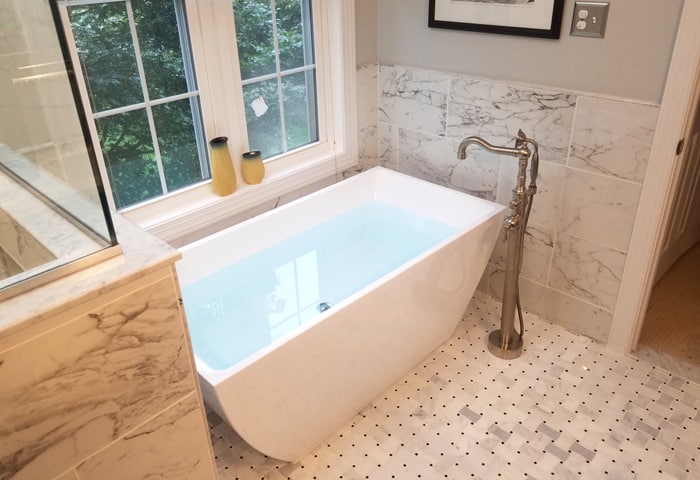
Porcelain is the safest bet in showers and wet areas because it won’t absorb water. If you prefer stone in a shower, use dense stones (e.g., slate or certain granites), waterproof the substrate properly, and commit to routine sealing. For bathtub surrounds, a sealed honed stone can work, but porcelain gives you more forgiveness long-term.
Basements
Basement floors in our area can have slight moisture issues. Porcelain or engineered products are better choices. If you love the look of natural stone, save it for a dry, above-grade space or use it as an accent — think hearths or a small feature wall rather than the whole floor unless you fully mitigate moisture and humidity.
Installation and long-term performance
Good installation is as important as material choice. For stone, insist on an installer experienced with the specific material: they should check for clefting, thickness variations, and natural veins. For porcelain, large-format panels require flat subfloors and proper thinset/mortar and movement joints to prevent lippage and cracking. In historic Chester County homes with uneven joists or floors, that prep work can add time and cost but is non-negotiable.
Sealing, cleaning, and upkeep—practical tips
- Ask about porosity numbers: Natural stone should come with a water absorption rate. High porosity means more frequent sealing.
- Choose a penetrating sealer for stone (reapply typically every 12–24 months depending on traffic).
- Use pH-neutral cleaners for stone. Avoid vinegar and citrus-based cleaners which will etch marble and limestone.
- For grout, use epoxy grout in showers or high-stain areas; it lasts longer and resists staining better than cement grout.
- Add anti-slip finishes or choose honed/textured surfaces for wet areas to improve safety, especially on exterior steps in Delaware County where dew and frost are common.
Budgeting and timeline considerations
When budgeting, factor material cost, specialized labor, substrate prep, and sealing/maintenance supplies. Natural stone installations can take longer because of selection, layout planning (bookmatching if you want it), and careful setting. Porcelain installs faster, especially with rectified tiles and standard layouts. If you need a quick turnaround, porcelain often helps keep the schedule on track.
How to decide for your project
- Prioritize durability and low maintenance? Lean porcelain.
- Prioritize a unique, high-end look and are OK with upkeep? Consider natural stone.
- Have uneven floors or a basement with potential moisture? Choose porcelain or engineered options.
- Planning outdoor surfaces? Favor porcelain unless you select a stone rated for freeze-thaw cycles.
Local tips from a Chester County remodeler
Living and working here for years, I’ve seen natural stone perform differently from one local house to the next because of microclimate and installation. Visit local tile and stone yards in Chester and Delaware Counties to see full slabs—not just small samples. Bring a tile sample home to view it in your light. At Craftsworth Construction we always mock up a small area when clients are unsure; seeing the material in your space prevents surprises.
"Match the material to the wear and care you’ll actually do—not the one you wish you’d maintain."
Final thought
Both natural stone and porcelain have excellent places in modern remodeling. The right choice depends on where you’re installing it, how much maintenance you're willing to commit to, and your design priorities. If you’d like, we can walk through samples, budgets, and local performance considerations—I’m happy to talk through specifics for your Chester or Delaware County home.
—Matt Morton, Craftsworth Construction