
How to Choose the Right Bathroom Vanity: A Practical Guide for Chester & Delaware County Homeowners
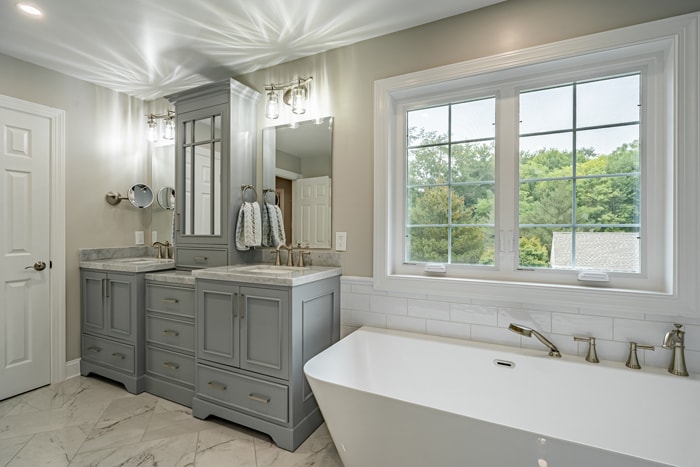
Why the vanity matters more than you think
Hi, I’m Matt Morton. After more than 20 years in the trades and building bathrooms across Chester County and Delaware County, I can tell you a vanity is more than a pretty cabinet—it organizes your morning, impacts moisture performance, and sets the tone for the entire bathroom. Pick the wrong size, material, or sink and you'll be living with those headaches for a decade. Choose well and your remodel will feel effortless every day.
Start with measurements and plumbing
Before you fall in love with a style, measure. I mean really measure: width, depth, and the distance from the floor to the current drain height (the rough-in). Common vanity widths are 24", 30", 36", 48" for single sink and 60"–72" for doubles. Typical depths run 18"–21". Standard countertop height is 32"–36"; 34"–36" is popular for adult comfort.
If you’re keeping the existing drain location, match your new vanity to that rough-in to avoid moving plumbing. In older Chester County and Delaware County homes, odd rough-ins are common—if you want a particular layout, plan for a plumber and a budget to move the drain.
Decide on sink style and placement
- Undermount: Clean look, easy to wipe crumbs into the sink. Pairs well with stone or quartz counters.
- Drop-in: Budget-friendly and simple to install.
- Vessel: Stylish but raises the counter height and can splash more; great for a powder room or modern look.
For double sinks, 60" is the practical minimum so two people can use the space comfortably. If a full double isn’t possible, consider a single sink with an extended counter for shared storage.
Choose cabinet construction that stands up to humidity
Bathrooms are humid by nature. I recommend plywood cabinet boxes over particleboard—plywood resists swelling and delamination better. If you’re working on a tighter budget, choose at least MDF drawer fronts with a durable finish rather than raw particleboard.
For painted cabinets, use a high-quality semi-gloss or satin enamel; for stained wood, choose a finish designed for bathrooms. I’ve seen too many vanities deteriorate because the wrong materials were used in moist environments.
Pick a countertop material based on use and maintenance
- Quartz: Low maintenance, non-porous, and durable—my top pick for busy households.
- Granite: Natural and heat resistant, but needs periodic sealing.
- Marble: Beautiful, but porous—best for low-traffic powder rooms.
- Solid surface (e.g., Corian): Repairable and seamless around sinks.
- Laminate: Budget-friendly and improved in recent years, but can peel at seams over time.
In Chester County’s seasonal climate, a non-porous surface like quartz helps avoid staining from toiletries and reduces maintenance demands.
Hardware, storage, and organization
Think through who will use the space and how. Soft-close drawers, full-extension glides, and deep drawers for towels make daily life easier. Include a mix of drawers and doors—drawers are better for small items and grooming tools; doors with adjustable shelves are great for bulk items.
Hardware finishes should coordinate with your faucets and lighting—oil-rubbed bronze, satin nickel, and matte black are popular in our area. Choose finishes that hide fingerprints if you have kids or heavy use.
Lighting and mirrors—don’t skimp
Lighting makes or breaks the vanity experience. Aim for layered lighting: an LED vanity light at face level (around 60"–65" from the floor) or sconces flanking the mirror for even illumination. Use 3000K warm-white LEDs with high CRI for accurate color when shaving or applying makeup.
Consider a medicine cabinet for extra storage or a recessed mirror for a cleaner, modern look. If you want a backlit mirror, factor in electrical planning early.
Ventilation and finishing details
Good ventilation prevents moisture damage to your new vanity. If your remodel includes changing the layout or enlarging the bath, plan for a properly sized exhaust fan vented to the exterior—this is especially important in older homes across Chester and Delaware Counties where attics and crawlspaces can retain moisture.
Finish seams where the countertop meets the wall with a high-quality sanitary caulk, and leave an access panel under the cabinet if possible so future plumbing work is easier.
Budget tiers and what to expect
Here’s a simple way to think about cost (installed):
- Economy/Stock: Ready-made cabinets and laminate or basic quartz—good for tight budgets.
- Mid-range/Semi-custom: Better materials, more sizes, quartz or granite counters, and upgraded hardware.
- Custom: Built-to-fit cabinets, premium woods and finishes, detailed trim, and high-end stone.
Choosing semi-custom often hits the sweet spot in Chester County—better durability without the full premium of custom work.
Practical checklist before you order
- Measure width, depth, and rough-in height for the drain.
- Decide single vs double and whether you’ll keep existing plumbing.
- Pick cabinet construction (plywood vs MDF) and finish type.
- Choose countertop material based on maintenance and style.
- Plan lighting, ventilation, and electrical needs early.
- Ask your contractor about installation details: anchoring to studs, shimming, and access panels.
Working with a local contractor
If you’re in Chester County or Delaware County and want a local perspective, reach out. At Craftsworth Construction we help homeowners pick vanities that fit both their space and lifestyle. I’ll walk through measurements, material trade-offs, and local quirks—like dealing with period trim in older West Chester homes or routing exhaust through tight attic spaces—so you don’t get surprised during installation.
Final thought
Choosing a bathroom vanity is a mix of measurements, materials, and real-life habits. Get those three right and you’ll enjoy your new space for years. If you want a second set of eyes on measurements or a local recommendation for materials that hold up well in our region, I’m happy to help—give us a call at Craftsworth Construction and we’ll talk through options that fit your home and your family.
Quick tip from the field: If you can, bring a photo of your current bathroom when you meet with your contractor. It helps us spot installation challenges and propose solutions that match your home’s character.
— Matt Morton, Craftsworth Construction