
Electrical Updates That Actually Matter
Why electrical updates deserve a seat at the design table
Hi, I’m Matt Morton. After 15+ years in the trades and leading remodels in Chester County and Delaware County, I can’t stress enough that electrical work isn’t just a checkbox—it’s the backbone of a safe, functional remodel. Whether you’re redoing a kitchen, reworking a bathroom, or finishing a basement, the right electrical updates will make your space work reliably for years and reduce surprises down the road.
Start with a real inspection, not assumptions
Before you pick a paint color or light fixture, have a licensed electrician do a full-panel and wiring inspection. In this area we see older homes with undersized panels, knob-and-tube wiring, or aluminum wiring that need professional evaluation. An inspection will tell you what can stay, what needs replacement, and whether you’ll need permits—vital for resale and for passing final inspections with local municipalities.
Common issues I find on Chester & Delaware County jobs
- Undersized panels (60–100 amp panels in homes that now need more): expect to upgrade in many full remodels.
- No GFCI/AFCI protection in kitchens, baths, basements—modern code requires these for safety.
- Improperly tapped circuits or too many high-draw appliances on one circuit, causing nuisance tripping or fire risk.
- Old wiring types (knob-and-tube, cloth-insulated) that should be removed or isolated.
Actionable items you can do right now
- Walk your home and make a list of major appliances (range, dryer, HVAC, EV charger) and where you want outlets and switches.
- Open the panel and take a photo (from a safe distance). Is it labeled? How many amps is the main breaker? Share the photo with your electrician.
- Test existing GFCI outlets and smoke/CO detectors—if they don’t trip or chirp, note their locations for replacement.
- Plan for future loads: adding a home gym, EV charger, or whole-home automation? Include those now rather than retrofitting later.
Practical wiring and fixture tips for each room
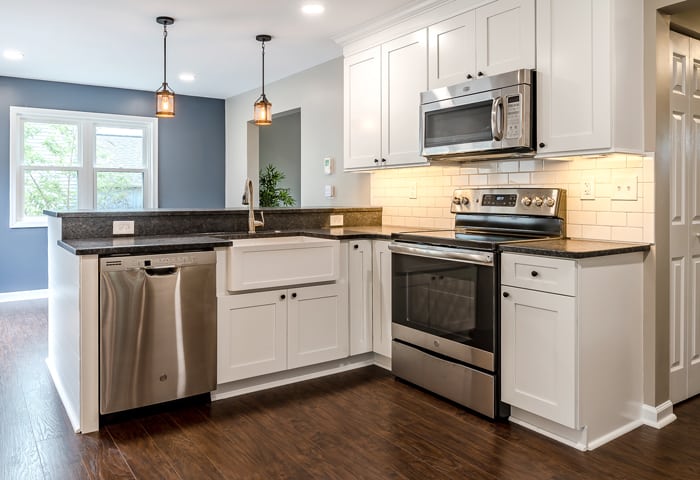
- Kitchens: Code requires small-appliance circuits for countertops and dedicated circuits for things like microwaves, ovens, and dishwashers. Islands need their own receptacle(s). When you’re redoing cabinets or countertops, now’s the time to add USB outlets, under-cabinet lighting, and properly placed receptacles so you’re not hitting appliance cord limits.
- Bathrooms: GFCI protection is mandatory. If you’re adding a heated floor, medicine cabinet, or vent fan, those need dedicated circuits depending on the load.
- Basements: For finished basements, think lighting layout and egress lighting, separate circuits for sump pumps, washers, and furnaces, and AFCI protection where required.
- Lighting: Switch to LED and plan dimmable circuits where appropriate. Consider smart switches during the remodel so wiring is hidden and the system is integrated properly.
Panel upgrades, subpanels, and surge protection
If you’re doing a major remodel, a service upgrade to 200 amps is common—especially in older Chester County homes. Adding a subpanel can be an economical way to power a new kitchen or basement without a full service replacement. Also, ask about whole-home surge protection to protect appliances from voltage spikes common on older utility connections.
Budget and timeline expectations
Every house is different, but here are ballpark figures to help you plan: adding a standard receptacle or replacing an outlet runs from roughly $100–$300; installing recessed LED cans usually costs $150–$300 each installed; adding a dedicated 20A circuit is often $200–$500; panel upgrades typically range $1,800–$4,500 depending on site conditions and permit requirements. A simple update can be done in a day, but a panel upgrade or full rewire can take several days plus time for inspections. Always get written estimates and a scope of work.
Permits, code, and inspections: do not skip them
Local municipalities in Chester and Delaware County require permits for most electrical upgrades. A permit ensures the work is inspected and meets the National Electrical Code and local amendments. It also protects your home insurance and future sale. When we do design-build projects at Craftsworth Construction, we coordinate permits and inspections so the electrical work integrates with the rest of the remodel.
Safety priorities—what to replace first
- Swap out any knob-and-tube or damaged cloth-insulated wiring.
- Address aluminum wiring issues or have a certified remedy installed.
- Install GFCIs in wet locations and AFCIs where required.
- Make sure smoke and CO alarms are hard-wired with battery backups and properly interconnected.
Hiring the right electrician and contractor
Hire a licensed electrician with local experience. Ask for proof of license and insurance, references from nearby jobs, and examples of permited work in Chester/Delaware County. If you’re hiring a remodeler to manage the project, make sure they subcontract licensed electricians and include electrical permits and inspections in the contract. We at Craftsworth Construction do that coordination so you don’t have to chase paperwork during demolition or installation.
A simple 7-step plan for homeowners
- List appliances, lighting, and future needs.
- Get a licensed electrician inspection and a written report.
- Prioritize safety fixes (knob-and-tube, GFCI/AFCI).
- Decide on panel/subpanel upgrades if needed.
- Obtain permits and schedule work during remodel rough-in.
- Install fixtures, label the panel, and test all circuits.
- Complete final inspection and keep documentation for future buyers.
Good electrical planning saves time, money, and safety headaches. Do it right the first time.
If you’re in Chester County or Delaware County and planning a remodel, I’m happy to walk through your plans with you and coordinate a licensed electrician to evaluate the scope. At Craftsworth Construction we focus on thoughtful updates that protect your home and make your remodel function the way you want it to—both today and five years from now.
Have a specific question about your panel, an old wire type, or what the code requires for your kitchen island? Send a photo of your panel and a list of your major appliances—I’ll take a look and point you in the right direction.